
A Meta ads account for a motorcycle parts brand should stay deliberately simple: a prospecting campaign to find new buyers, a catalog (Advantage+) campaign driven by your product feed, and a retargeting campaign for site visitors and add-to-carts. Over-segmenting starves each ad set of the conversion data Meta needs to optimize, so fewer, well-fed campaigns beat many thin ones.
Key takeaways
- Keep the account simple: prospecting, catalog, and retargeting, three ad sets total.
- Connect your product catalog so Meta can dynamically show the right part to the right visitor.
- Retargeting is the highest-efficiency spend for parts brands with existing traffic.
- Give each ad set enough budget and conversions to exit the learning phase.
- Creative that shows the part on the machine outperforms studio-only shots.
Why does Meta reward a simple account structure?
Meta’s delivery system optimizes using conversion data. Every ad set needs a steady flow of conversion events to learn who to show ads to and when. Split your budget across too many ad sets and each one starves, none gets enough signal to optimize, and performance stalls in the learning phase. For a motorcycle parts brand with a finite budget, consolidation is not laziness; it is how the algorithm actually works. Meta’s own Business Help Center documents campaign objectives, and the Marketing API overview lays out the campaign → ad set → ad hierarchy.
This complements the harvest-first logic in our paid ads pillar: Google Shopping captures existing demand, and Meta builds and recaptures it.
What is the recommended account structure?
| Campaign | Objective | Audience | Job |
|---|---|---|---|
| Prospecting | Sales / conversions | Broad or interest-based (motocross, off-road, specific brands) | Find new buyers |
| Catalog (Advantage+) | Sales, catalog | Broad + feed-driven | Show relevant parts automatically |
| Retargeting | Sales / conversions | Site visitors, add-to-carts, past buyers | Recapture warm demand |
Many smaller brands can collapse prospecting and catalog into a single Advantage+ Shopping campaign and run one retargeting campaign alongside it. Start simple and only add structure when the data tells you a segment deserves its own budget.
How do you connect your parts catalog to Meta?
Your catalog is the same product data that powers Google Shopping, formatted for Meta’s commerce system. Shopify can sync it through the Facebook & Instagram channel, or you can supply a feed. Meta’s product data specifications for catalogs define the required and recommended fields. Clean titles, correct categories, and good images carry over directly from the work in our fitment feed guide.
What creative works for motorcycle parts?
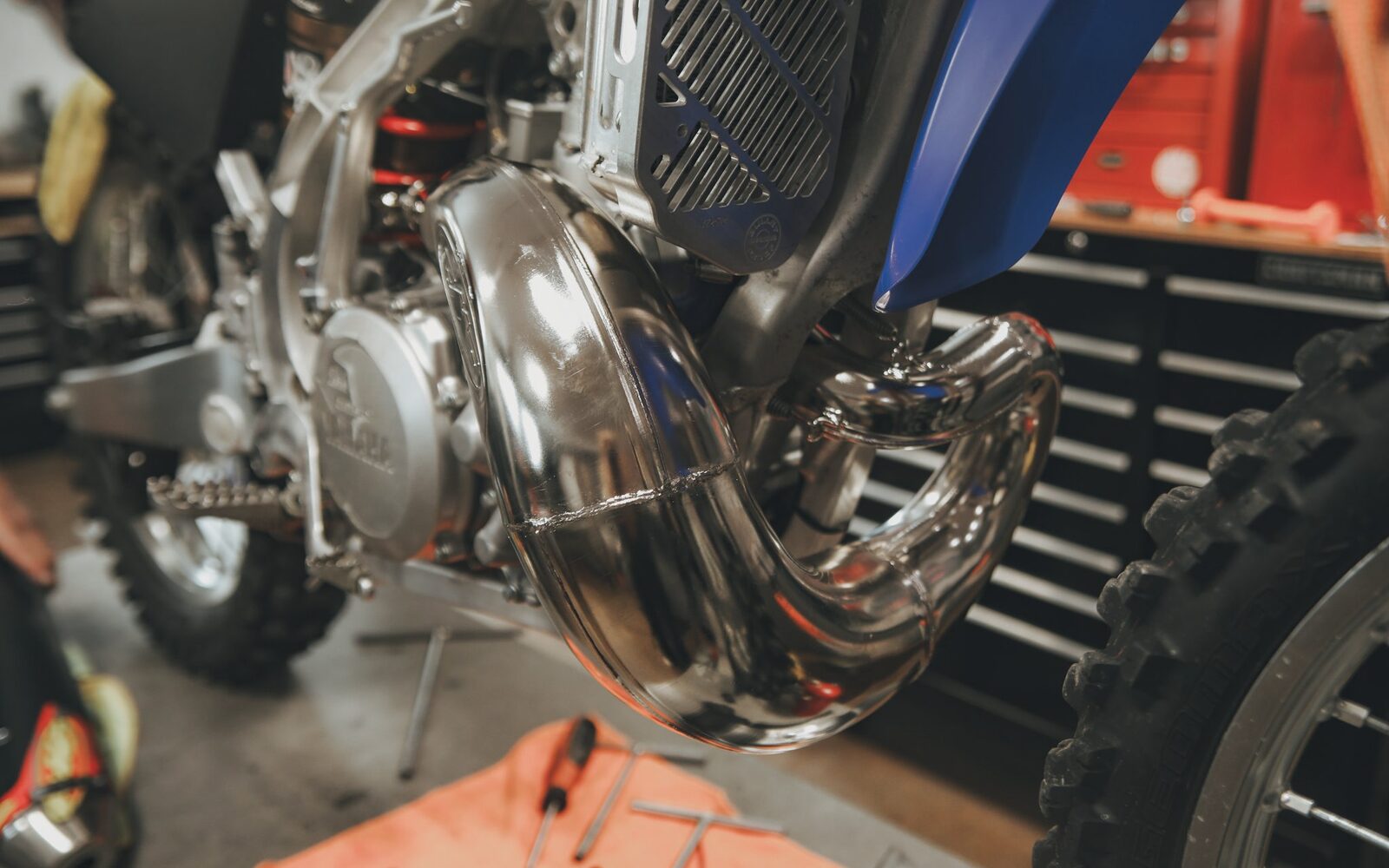
- Part on the machine. Context beats a white-background studio shot. Show the exhaust mounted, the suspension installed.
- Real riding footage. Content from sponsored riders and onsite shoots outperforms stock.
- Problem/solution. Lead with the pain (stock part failing, poor performance) and the fix.
- Specific machines. Creative that names a model speaks directly to that rider.
Setup steps
- Install and verify the Meta Pixel and Conversions API for reliable event tracking.
- Sync your product catalog from Shopify or a feed.
- Build retargeting audiences from site activity and customer lists.
- Launch one prospecting/catalog campaign and one retargeting campaign.
- Fund each ad set enough to exit the learning phase before judging it.
- Review by ROAS and new-customer revenue; expand only what earns it.
How should budget move between the three campaigns?
Think in layers. Retargeting is almost always the most efficient spend because you’re recapturing people who already showed intent. Fund it first and fully, but cap it, because its reach is limited by how much traffic you have. The prospecting/catalog campaign is where you scale once retargeting is saturated; it’s less efficient per dollar but it’s what grows the business. A common split for a parts brand getting started is a solid retargeting base with the majority of budget pushed into broad prospecting/catalog once tracking and creative are proven.
Resist the urge to judge prospecting on last-click ROAS alone. It does the top-of-funnel work that feeds retargeting; starve it and your warm audiences dry up a few weeks later. Read the account as a system, which is the same logic as the harvest-first budgeting in our paid ads pillar.
What are the most common Meta mistakes for parts brands?
- Too many ad sets. Splitting budget across narrow audiences keeps everything stuck in learning.
- Pixel-only tracking. Skipping the Conversions API loses events and misreports ROAS.
- A thin or broken catalog. Bad titles and images undercut catalog ads no matter the budget.
- Studio-only creative. Parts sell on context and proof, so show them on the machine.
- Impatience. Turning ad sets off before they exit learning throws away the data you paid for.
How does this connect to Google Shopping?
Meta and Google run off the same raw material, your product data, and do different jobs. Google Shopping harvests existing intent; Meta builds demand and recaptures it. The cleaner your feed, the better both perform, which is why the work in our fitment feed guide and the Merchant API migration pays off across channels. Run them as one program, and report them together so you can see how paid demand creation on Meta lifts branded and Shopping search on Google.
Related reading
- Pillar: Paid ads for powersports & aftermarket brands
- How to get fitment data into Google Shopping
- Migrating Merchant Center to the Merchant API
How do you build retargeting audiences for a parts brand?
Retargeting is where most parts brands get their cheapest conversions, so build the audiences deliberately. Layer them by intent: product viewers, add-to-carts, and past purchasers each warrant different messaging. A past buyer is a candidate for cross-sell and consumables; an add-to-cart who didn’t buy may just need a nudge or a shipping reminder. Feed these audiences from both the Pixel and your customer list so you’re not relying on a single, leaky signal source.
- Catalog viewers: dynamic ads showing the exact parts they looked at.
- Add-to-cart, no purchase: reminder creative, sometimes with an incentive.
- Past purchasers: complementary parts, consumables, and upgrades for their machine.
- Lookalikes: built from your best customers to feed prospecting.
Keep retargeting windows sensible. A 180-day window on a brand with high traffic can balloon the audience until it’s really just prospecting with a worse name. Tighter, intent-based windows usually convert better per dollar.
Frequently asked questions
How many ad sets should a small parts brand run?
As few as will reliably generate conversions. Many brands do best with one broad prospecting/catalog ad set and one retargeting ad set. Add more only when a specific audience consistently earns its own budget and has the volume to optimize.
Should I target by specific motorcycle interest?
You can, but broad targeting with a strong catalog and good creative often outperforms narrow interest stacks on Meta today. Let the catalog and the algorithm find buyers, and use creative, like naming the machine, to signal relevance.
What is the learning phase and why does it matter?
It is the period when Meta’s system is still gathering data to optimize an ad set. Until an ad set accumulates enough conversions, delivery is unstable and results are unreliable. Splitting budget too thin keeps ad sets stuck in learning, which is why consolidation helps.
Do I need the Conversions API, or is the Pixel enough?
Run both. The browser Pixel misses events due to ad blockers and browser restrictions; the server-side Conversions API recovers that signal. Better event data means better optimization and more accurate ROAS, which matters most on a limited parts-brand budget.
By Brooks Tomblin, Ormond Brand Consulting. Marketing & business consulting for motorsports and outdoors businesses.
Last updated: November 2026
